Recovery after stroke is a team effort. We built the team for you.
One recovery plan, with physiotherapy, speech and language therapy, occupational therapy, psychology and nutrition working together under one roof in Naalya, Kampala.
A therapist replies during clinic hours: Mon-Fri 8am-6pm, Sat 9am-3pm.
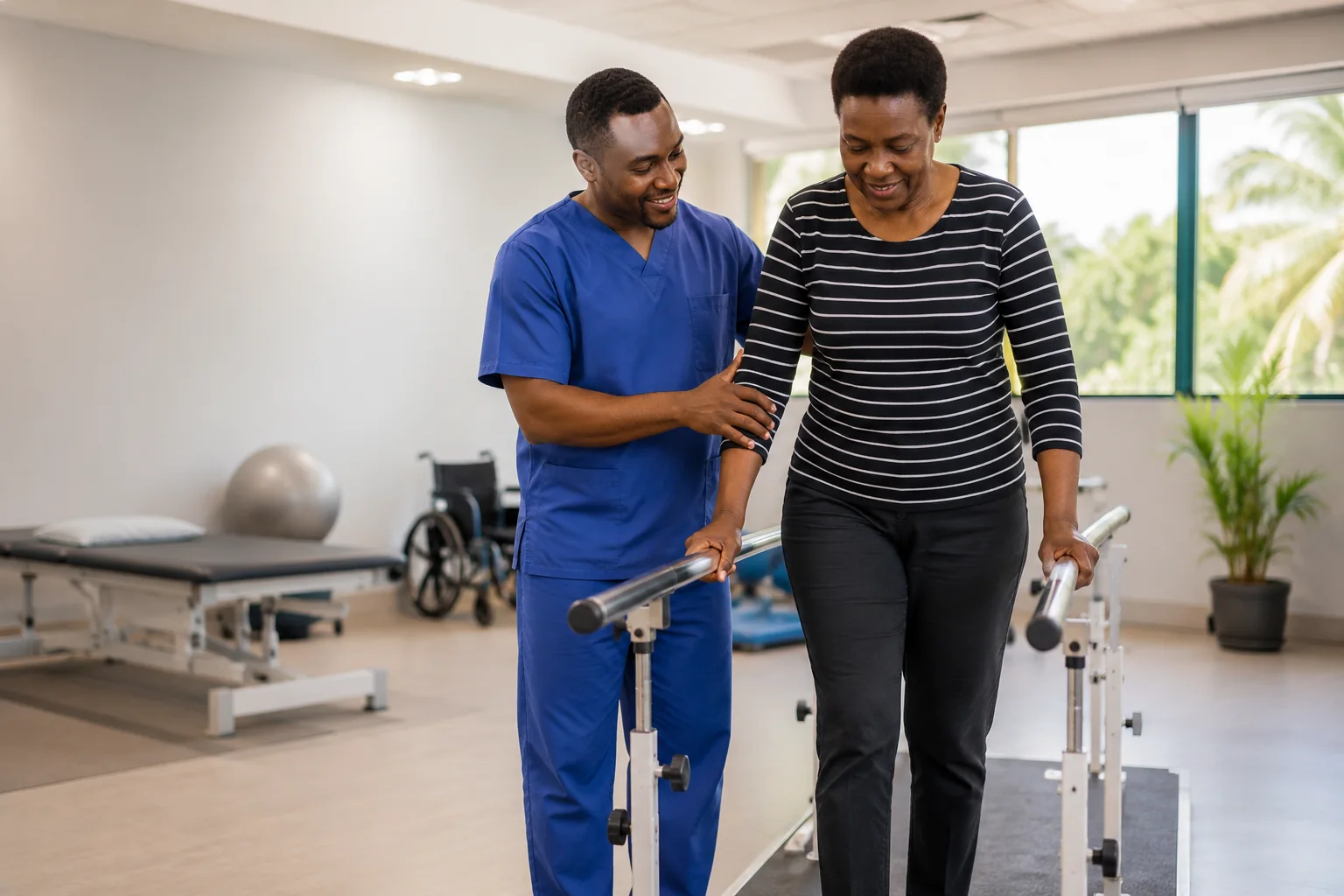
The hospital stabilised the emergency. Now the family is asking, “what happens next?”
A stroke can change a family in a single day. Someone who was walking, talking and managing life independently may suddenly need help to move, use an arm, swallow, find words, remember a routine or manage emotions.
The person recovering is not the only one affected. Spouses, children and caregivers often become responsible for appointments, exercises, transport, meals and decisions while trying to understand what recovery may look like.
The brain and body can relearn skills through rehabilitation, although every recovery is different. Movement, communication, swallowing, daily activities, thinking and emotional wellbeing are connected, so rehabilitation works best when the right disciplines share goals rather than working in isolation.
Multidisciplinary neurological rehabilitation
Our programme supports adults with neurological conditions affecting movement, communication and independence, together with the families supporting them.
Stroke
Recent or long-standing stroke with weakness, balance changes, arm or hand problems, speech or language loss, swallowing difficulty or reduced independence.
Parkinson’s disease
Rehabilitation for movement, walking, balance, voice and daily function, coordinated around the person’s current needs and medical care.
Spinal cord injury
Selected rehabilitation needs involving mobility, function, independence, equipment, routines and caregiver training.
Multiple sclerosis
Goal-led support for movement, fatigue-related functional challenges, balance and everyday participation as clinically appropriate.
Brain injury
Rehabilitation for physical, communication, cognitive and daily-function changes following traumatic or acquired brain injury.
Balance & neurological weakness
Assessment for selected nerve weakness, numbness, balance problems and falls where neurological rehabilitation is appropriate.
First, a word about safety
A suspected stroke is a medical emergency. Sudden facial drooping, arm weakness, speech difficulty or other sudden neurological symptoms require immediate emergency medical assessment. Do not wait for a rehabilitation appointment.
Rehabilitation begins after the medical team has stabilised the person. We work alongside doctors and hospital teams, not in place of them.
One recovery direction
Once the person is medically safe for rehabilitation, our team assesses the areas that influence independence. With consent, we can coordinate with the treating doctor, follow relevant precautions and share meaningful progress information.
Different specialists, shared recovery goals
Stroke and neurological recovery can involve several systems at once. The relevant disciplines coordinate priorities so gains in one area support progress in another.
Physiotherapy: movement
Neurological physiotherapy works on strength, balance, transfers, walking, movement control and confidence. The programme may include recognised neurological approaches such as LSVT BIG where appropriate and delivered by trained clinicians.
Speech therapy: communication & swallowing
Support for speaking, understanding, word finding, voice and safe swallowing after stroke or neurological change. LSVT LOUD may be used for suitable Parkinson’s presentations by appropriately trained clinicians.
Occupational therapy: daily life
Retraining dressing, bathing, cooking, hand use, memory strategies, routines, home safety and other skills linked to everyday independence.
Psychology: emotional recovery
Confidential support for mood, adjustment, anxiety and the emotional load of neurological recovery, including caregiver wellbeing when needed.
Nutrition: practical health support
Nutrition guidance can support recovery and help families make practical eating choices around existing medical advice and conditions such as hypertension or diabetes.
Family & caregiver training
Caregivers learn safe, practical ways to support transfers, exercises, communication and daily routines without unnecessarily taking over tasks the person can relearn.
Assessment, one plan and measurable reviews
We listen and assess
Movement, speech, swallowing, daily function, thinking, mood and nutrition are reviewed according to the person’s needs.
We build one plan
The relevant disciplines agree on meaningful, measurable goals with the patient and family.
We treat
Therapy may combine movement training, task practice, communication or swallowing work, counselling and nutrition support.
We measure progress
Function is reviewed at planned intervals so therapy is adjusted as milestones are reached.
We train the family
Caregivers receive home exercises and practical guidance so useful repetition continues between sessions.
We plan the next chapter
Discharge and longer-term support focus on maintaining safety, independence and participation.
No miracle promises. Serious rehabilitation.
Recovery varies according to the type and severity of neurological injury, medical factors, starting function, therapy intensity, consistency and the goals that matter to the person. Some people regain major independence; others make smaller but meaningful gains in safety, communication or daily function.
Early rehabilitation matters, but later progress is still possible
The early period after stroke is important for rehabilitation, which is why planning should begin as soon as the medical team says the person is stable. A stroke that happened months or years ago does not automatically mean therapy has no value. Assessment tells us what can still be trained and what goals are realistic now.
Plan neurological rehabilitation
Plot 285, Spine Drive, Naalya Housing Estate, Kampala. Parking available.
Monday-Friday 8:00am-6:00pm. Saturday 9:00am-3:00pm.
Home-based rehabilitation is available when travel is difficult. Selected secure video reviews can support follow-up where appropriate.
Self-pay clinic. Itemised receipts available. English, Luganda and German.
Stroke rehabilitation FAQs
How soon after a stroke should rehabilitation start?
Rehabilitation can begin once the medical team confirms that the person is medically stable and safe to participate. Timing and intensity depend on the stroke, current function and medical status, so early discussion with the treating team is useful.
The stroke happened a long time ago. Is it too late for therapy?
Not necessarily. The largest changes often occur earlier in recovery, but people can continue to improve skills later with targeted practice. An assessment can identify current limitations, strengths and realistic rehabilitation goals.
Do you treat neurological conditions other than stroke?
Yes. The multidisciplinary team can support selected needs related to Parkinson’s disease, spinal cord injury, multiple sclerosis, brain injury and other neurological conditions affecting movement, communication or independence.
Can stroke therapy happen at home?
Yes, where clinically appropriate. Home-based rehabilitation can be useful when travel is difficult or when practising tasks in the home environment is important. Clinic-based care can be introduced as mobility and transport improve.
Will you work with our doctor or hospital team?
Yes, with the patient’s consent. Rehabilitation should complement medical care. Relevant progress information can be shared with the referring doctor or treating team to support continuity of care.
Schedule a Neurological Rehabilitation Assessment
Message us on WhatsApp, tell us what happened and what the person can currently do. A member of our rehabilitation team will guide you on the most appropriate next step, including whether medical review should come first.
+256 752 045 865 | info@therehab.clinic