Speech, Language and Swallowing Therapy
Find your voice and communicate with greater confidence. The Rehab Clinic provides professional speech, language and swallowing therapy in Naalya, Kampala for children and adults, with respectful support tailored to communication, feeding and everyday life.
A member of our rehabilitation team replies during clinic hours: Mon-Fri 8am-6pm, Sat 9am-3pm.
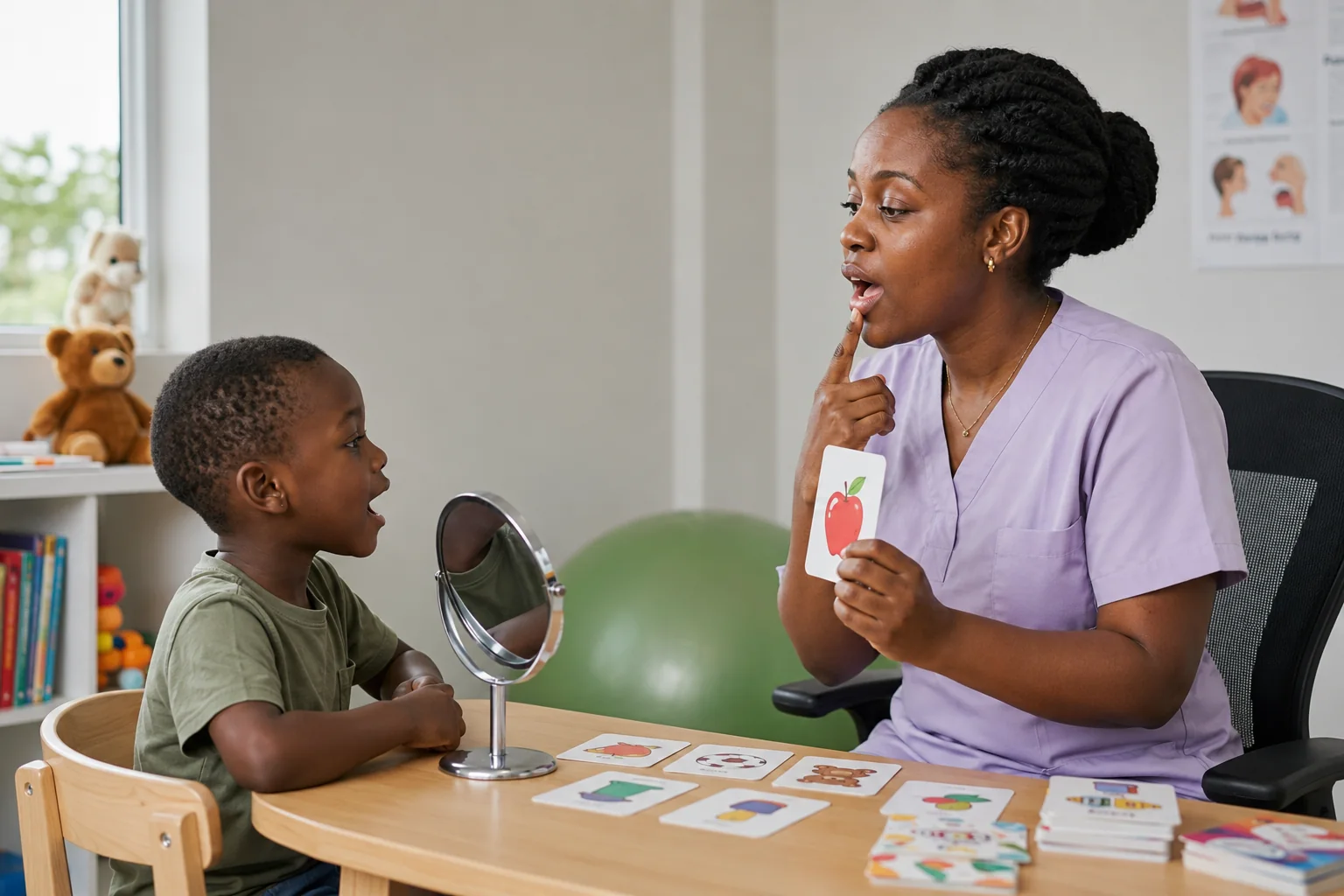
Support for being understood, understanding others and swallowing safely
Communication difficulties can affect confidence, relationships, school, work and independence. For some people, the challenge is finding the right words. For others, it is producing clear speech, understanding language, using the voice effectively or communicating after a neurological injury.
Swallowing problems can be equally disruptive because they affect eating, drinking, nutrition and safety. Our speech and language therapy service begins with careful assessment, then builds a plan around the person’s age, diagnosis, goals and daily environment.
Speech therapy for children and adults
We support a range of communication and swallowing needs, with the treatment plan guided by assessment rather than diagnosis alone.
Child speech & language development
Support for delayed language, unclear speech, difficulties expressing needs, understanding language, stammering and other communication concerns.
Autism & developmental communication
Individualised communication support for children whose developmental profile affects interaction, language use or participation in everyday routines.
Speech after stroke
Rehabilitation for aphasia, dysarthria and other communication changes after stroke, working toward practical communication in daily life.
Brain injury & neurological conditions
Support for speech, language, voice, cognitive-communication and related difficulties following traumatic brain injury or neurological disease.
Voice & fluency
Assessment and therapy for selected voice difficulties and stammering, with strategies adapted to the person’s communication demands.
Feeding & swallowing
Assessment and rehabilitation for chewing, feeding and swallowing difficulties where speech and language therapy is clinically appropriate.
From your first visit to your next chapter
We start by listening. For children, that includes what parents or caregivers have noticed at home, school and mealtimes. For adults, we look at the communication or swallowing changes that are affecting independence, relationships and daily routines.
Assessment findings are explained in plain language. We then create a focused treatment plan, review progress and teach the person and family practical strategies that can be used between sessions.
Swallowing safety matters
New or severe swallowing difficulty, repeated choking, breathing distress or inability to safely take food or fluids can require urgent medical assessment. Speech and swallowing rehabilitation supports recovery after the person is medically stable and safe to participate.
A clear plan with practical goals
We listen
We understand the communication or swallowing concern, when it started and how it affects everyday life.
We assess
The therapist evaluates relevant speech, language, communication, voice or swallowing functions according to the presenting problem.
We explain
You receive clear feedback on what the assessment shows and which goals are realistic and meaningful.
We treat
Sessions use targeted exercises, communication practice, strategies and caregiver coaching suited to the person’s needs.
We measure progress
The plan is reviewed as communication, participation or swallowing safety changes over time.
We carry skills into daily life
Home practice and family guidance help useful communication strategies continue beyond the therapy room.
Early support for communication development
When a child is not using language as expected, has unclear speech or struggles to communicate needs, families often hear conflicting advice about whether to wait. A professional assessment can clarify what the child is already doing well, what skills need support and whether therapy is indicated.
Where a child has wider developmental needs, our speech therapist can work as part of the Neurodevelopment Clinic with physiotherapy, occupational therapy, psychology and nutrition.
Rebuilding communication after illness or injury
After stroke or brain injury, a person may know exactly what they want to say but struggle to find words, form clear speech or follow conversation. Therapy works on the specific communication systems affected and on strategies that make everyday conversations more successful.
When several functions are affected, care can be integrated with neurological physiotherapy and occupational therapy so recovery is coordinated around one set of goals.
Plan your visit
Plot 285, Spine Drive, Naalya Housing Estate, Kampala. Parking available.
Monday-Friday 8:00am-6:00pm. Saturday 9:00am-3:00pm.
With consent, caregivers can join education and home-practice planning to support progress outside sessions.
Self-pay clinic. Itemised receipts available. English, Luganda and German.
Speech therapy FAQs
Who can benefit from speech therapy?
Speech and language therapy can support children and adults with difficulties involving speech clarity, language, communication, voice, fluency or swallowing. Assessment determines the specific area that needs support.
Can you help a child who is late to talk?
Yes. A speech and language assessment can look at how a child understands language, uses words, communicates needs and produces sounds. Where therapy is appropriate, the family is shown practical ways to support communication at home.
Do you provide speech therapy after stroke?
Yes. Adults may need support with aphasia, speech clarity, voice, cognitive-communication or swallowing after stroke or other neurological conditions. Care can be coordinated with physiotherapy and occupational therapy when needed.
What happens if swallowing is difficult?
Swallowing problems can affect safety and nutrition. A therapist assesses the person’s swallowing function and recommends appropriate strategies. Sudden or severe swallowing difficulty, choking or breathing problems require prompt medical attention.
Will family members be taught how to help?
Yes, with the patient’s consent. Family and caregiver coaching is an important part of communication and swallowing rehabilitation because useful practice continues outside the clinic.
Take the first step toward better communication
Book a consultation with our speech, language and swallowing therapy team. Tell us what you have noticed and we will guide you on the most suitable next step.
+256 752 045 865 | info@therehab.clinic